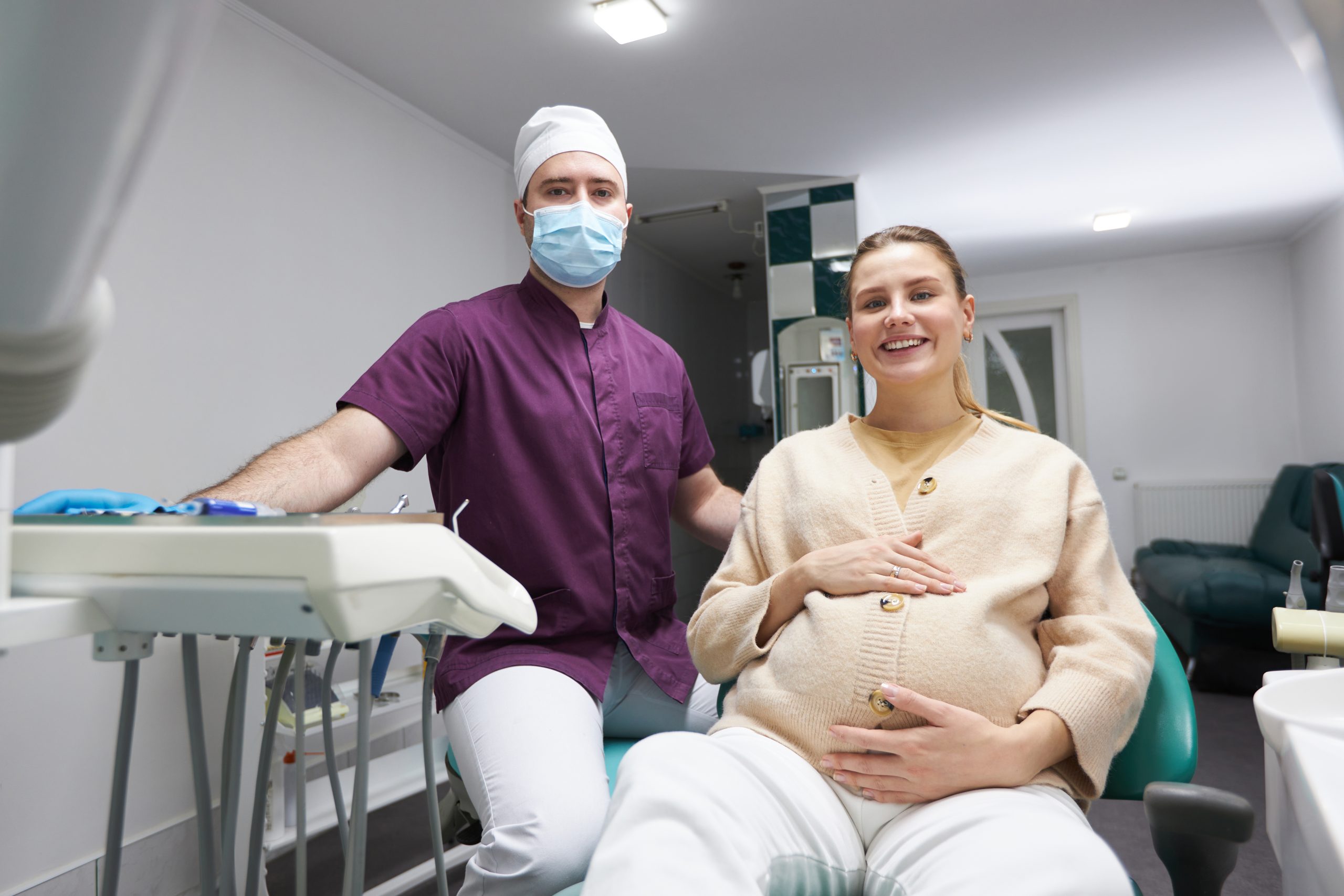
Prenatal care isn’t just about antenatal appointments and monitoring baby movements; it includes looking after your smile, too. We often hear from pregnant women who are worried that dental work might be harmful to their developing baby and ask us if it’s safe for them to come in for a dental appointment.
The short answer is: Yes, you absolutely can (and should) go to the dentist.
Maintaining your oral health is a critical part of a healthy pregnancy. If you are experiencing a dental emergency or a dangerous/painful oral health care routine issue, you should have a dental professional evaluate the problem immediately. Addressing infections in the mouth or a dental abscess is far safer for you and your baby than leaving an infection untreated. Our dental team will carefully assess whether a dental procedure is urgent or if it can wait until after your delivery. In some cases, we can even provide a temporary solution to avoid the need for local anesthesia if you have concerns about the first trimester.
When should I see a dentist while pregnant?
While dental visits are encouraged throughout your journey, timing is everything. Generally, the second trimester is considered the “sweet spot” for dental treatment.
During the first trimester, the baby’s organs are developing, and some women struggle with morning sickness, dry mouth, and tooth erosion from stomach acid. By the third trimester, sitting in a dental chair for long periods can become physically uncomfortable, and we want to avoid any unnecessary stress. In the second trimester, most women feel “more or less normal,” making it the safest and most comfortable window to intervene if a dental procedure like cavity fillings or a tooth extraction is required.
Are there any risky dental procedures while pregnant?
When you visit us, your safety is our absolute priority. We strictly follow guidelines from health authorities to ensure our care is evidence-based.
There are certain oral issues that require caution. We generally advise that all non-emergency or elective dental procedures (such as cosmetic whitening, dental implants, or new crowns) be postponed until after the baby arrives. We also take care with medications; while local anesthetics used in the chair are typically safe, we avoid high-toxicity medications like certain narcotics.
However, it is important to remember that dental cleaning and regular dental hygiene programs are not risky; in fact, they are highly recommended. Staying on top of your dental hygiene prevents periodontal disease, which has been linked by some studies to complications like preterm birth.
Can you get a filling while pregnant?
Yes, you can. If you have tooth decay, leaving it alone can lead to a painful dental abscess or more severe oral infections. Getting a filling usually involves local anesthesia. In the vast majority of cases, this is perfectly safe and well worth it to prevent a cavity from expanding or causing significant discomfort.
When we place fillings, we use composite resin (mercury-free dental fillings) to ensure your smile stays healthy and beautiful without unnecessary concerns about dental amalgam.
Can I get dental radiographs during pregnancy?
This is one of the most common questions we hear at our Toronto clinic. As a general rule, our dental team aims to minimize the use of dental X-rays during pregnancy.
However, digital radiography is a vital tool for diagnosis. If X-rays are unavoidable (for instance, to treat a severe infection or a broken tooth), then you should have them. We use modern dental equipment and protective lead aprons to ensure that radiation exposure is virtually non-existent for the baby. If they are needed to make a proper diagnosis, the benefit of treating the problem outweighs the minimal risk.
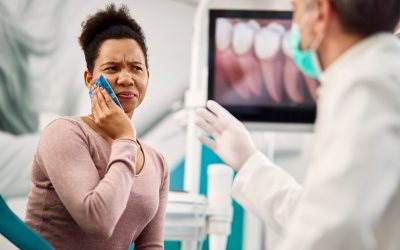
Toothaches in pregnancy: Why do they happen?
It is a common myth that having a toothache is just a “normal” part of being pregnant. Toothaches are not a direct side effect of pregnancy itself. If you are experiencing pain, it needs to be looked into by a dental professional.
Whether it is a case of gum erosion, pyogenic granuloma (small pregnancy growths on the mucous membranes), or simple tooth decay, don’t just “put up with it” because you are pregnant. We are here to help you find relief safely.
Dental cleaning and pregnancy: Is it an unnecessary risk?
Quite the opposite! During pregnancy, your body undergoes significant hormonal shifts that can lead to “pregnancy gingivitis.” This is a form of gum disease where the gums become inflamed, sensitive, and may bleed more easily.
In these cases, you might actually need a dental cleaning more often than usual. Even if your gums are bleeding, it is essential to maintain your oral health care routine at home. This includes:
- Brushing twice a day with fluoride toothpaste
- Using a soft infant toothbrush if your regular brush triggers morning sickness.
- Daily flossing to prevent periodontal disease.
- Rinsing with a mixture of water and baking soda if you suffer from acid reflux to protect against tooth erosion.
Supporting your overall health
Your oral health is deeply connected to your general well-being. Alongside your prenatal visits, ensure you are getting the right vitamins and minerals, such as folic acid, vitamin D, and calcium, as recommended by the Canada Food Guide.
While you manage sugar cravings and prepare for your new arrival, don’t forget your routine health milestones, like your flu vaccine, whooping cough vaccination, and COVID-19 vaccine. Being healthy overall (from your oral hygiene to your travel vaccinations) creates the best environment for your baby to grow.
Book Your Consultation at The Little Green Building
We are here to provide a cozy, family-oriented atmosphere for your care. Our multilingual team speaks English, French, Russian, Ukrainian, Spanish, and Filipino, ensuring you feel heard and understood.
We make the process stress-free with Direct Billing to insurance, support for the CDCP, and interest-free payment plans. Book a consultation and get in touch with us to get started!